White Paper

Modern Wi-Fi onboarding for inflight connectivity

Aaro Korhonen

April 23, 2026

Engineering guide to captive portals.


Matching the passenger’s expectations

Inflight connectivity has become a standard expectation for passengers, but providing it consistently is more challenging than it appears from a window seat. Successful Wi-Fi connections depend on a series of network decisions, protocol negotiations, and device-specific behaviors that must work together.

The moment a passenger opens their laptop or unlocks their phone, that chain is put to the test.

What is a captive portal?

A captive portal controls network access until passengers authenticate or accept terms. It has traditionally functioned as a gatekeeper and an information hub. We treat it as a launch point, designed for minimal friction and a fast transition into the full browser experience.

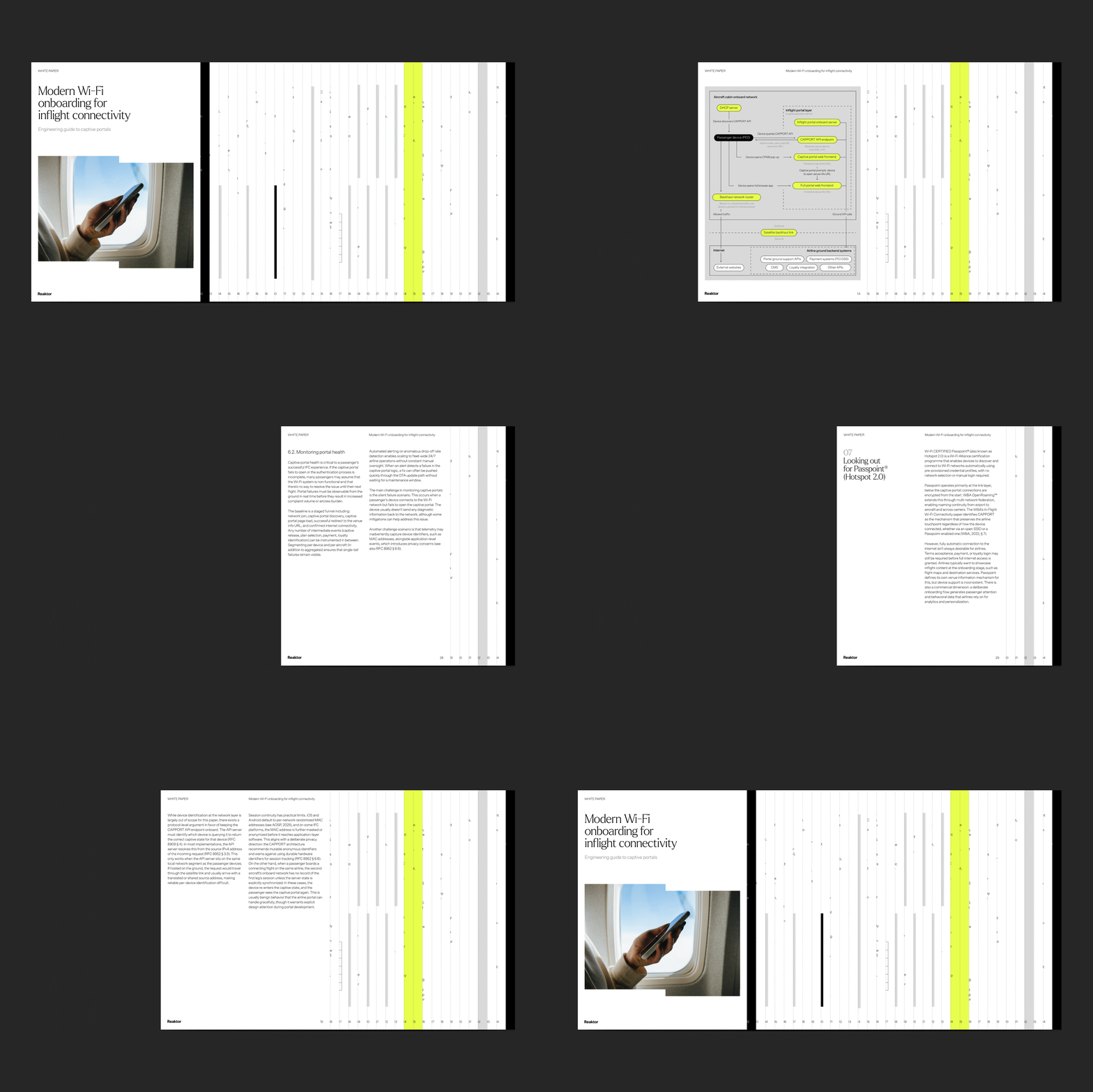
reaktor-aero-wp-modern-wifi-onboarding-2026

Building captive portals for the modern era


This paper examines the gap from network architecture and captive portal standards through to integration, device compatibility, and operational deployment.

true

Evolution of Wi-Fi onboarding

From legacy to modern captive portal. The way devices connect to inflight Wi-Fi has changed – but most portal implementations haven't kept up.

→ How did legacy captive portals work, and where do they fall short?
→ What does the shift to standards-based onboarding look like in practice?
→ How does CAPPORT redefine the handshake between network and device?


true

Meet the inflight connectivity stack

The captive portal sits inside a layered system of hardware, software, and stakeholders, each with its own architectural responsibilities.

→ Onboard vs. ground-hosted deployment: what's at stake?
→ Why does the CAPPORT API endpoint belong on the aircraft?
→ How session continuity works – and where it breaks down?


true

How different devices handle captive portals

Every major operating system handles captive portal detection differently. Building a portal that works reliably means understanding each platform on its own terms.

→ How does Apple's captive network assistant (CNA) interact with CAPPORT?
→ What makes Android behaviour harder to predict?
→ How do other platforms and edge cases factor into implementation?


true

Why less is more in captive portal design

The best captive portal is one that passengers barely notice. The goal is to guide passengers through it quickly.

→ Why treating the captive portal as a springboard beats building it as a destination?
→ How does the venue info URL create a stable, branded experience passengers can return to?
→ Why does a thin portal mean better data, better personalisation, and less to maintain?


Related content

Modern Wi-Fi onboarding for inflight connectivity

Modern Wi-Fi onboarding for inflight connectivity

  • White Paper
AIX 2026: Open platforms and the harder question connectivity raised

AIX 2026: Open platforms and the harder question connectivity raised

  • Article
Reaktor and RAVE Aerospace showcase next generation GUI concept at AIX

Reaktor and RAVE Aerospace showcase next generation GUI concept at AIX

  • Announcement
You're offering free wi-fi onboard. Now what?

You're offering free wi-fi onboard. Now what?

  • Article