Summary
ADMARES is reinventing how homes are built: produced in a high-tech factory, shipped move-in ready, and connected from the moment the power turns on. Built on a modular system that scales from a 65 square meter starter home to a 450 square meter family residence, each one leaves the factory with every smart system already live.
As ADMARES's software and design partner, we build the platform that puts that intelligence in residents' hands, giving them real-time control of energy, comfort, health, and security, with aggregate performance data informing how every future generation of homes gets built.
Highlights
Factory-integrated intelligence
Every sensor, meter, and control system is wired in before the home leaves the factory floor, with no retrofitting required on-site.
One app, every system
Residents control lighting, climate, appliances, security, and energy through a browser-based interface designed for touchscreens, tablets, phones, and computers
Offline-first architecture
The platform runs on local edge computing, so core functions remain available even without a cloud connection.
Built for longevity
The platform architecture is designed to manage integrations as connected devices and systems evolve over the lifetime of the building.
From ship cabins to factory-built homes
ADMARES was built on a vision that the construction industry has resisted for decades: that homes can be manufactured like products, with the precision, consistency, and scalability of a factory floor. The founding team brought deep expertise in modular engineering and off-site fabrication from the shipbuilding industry, where those methods had been proven in some of the most demanding environments on earth. Housing, they believed, deserved the same.
The logic is straightforward. Traditional construction is slow, weather-dependent, and difficult to standardize. A factory isn't. Robots build the steel frames. Assembly line operators connect the systems. A completed home rolls out every 22.5 minutes. From a 65 square meter starter home to a 450 square meter family residence, each one leaves the factory move-in ready, with appliances installed, finishes complete, and smart systems live.
The first factory is planned for Australia, where developers and builders face acute demand for affordable, high-quality housing at scale. ADMARES is building toward a future where a developer orders homes the way a retailer orders product: predictable cost, predictable timeline, no site surprises.
Factory production also dramatically cuts construction waste compared to traditional building sites, and every home's smart energy system, learning when to cool, heat, and draw from solar, compounds those environmental gains over the lifetime of the building.
The software that makes a smart home actually smart
Beyond rethinking how homes are built, ADMARES has a vision for what a home can do. Every one that leaves the factory is fully smart, and building the software behind that is where we come in.
We designed and developed the resident-facing smart home platform around local edge computing. The system runs on an industrial edge device based on NVIDIA Jetson Orin NX, providing a foundation for operating and monitoring connected home systems locally.
To move fast on a tight timeline, with plenty still being decided along the way, we built the platform with Claude. ADMARES set up its own Claude Team workspace for the project, where our developers worked with Claude Code and Claude Cowork, and our designers refined the interface in Claude Design.
The platform can provide residents with visibility into the home’s electricity consumption and solar generation. Solar energy contributes to the home’s overall electricity use, while any additional demand is supplied by the grid. Where supported by the energy setup, surplus solar production can be exported back to the grid.
What living in an ADMARES home feels like
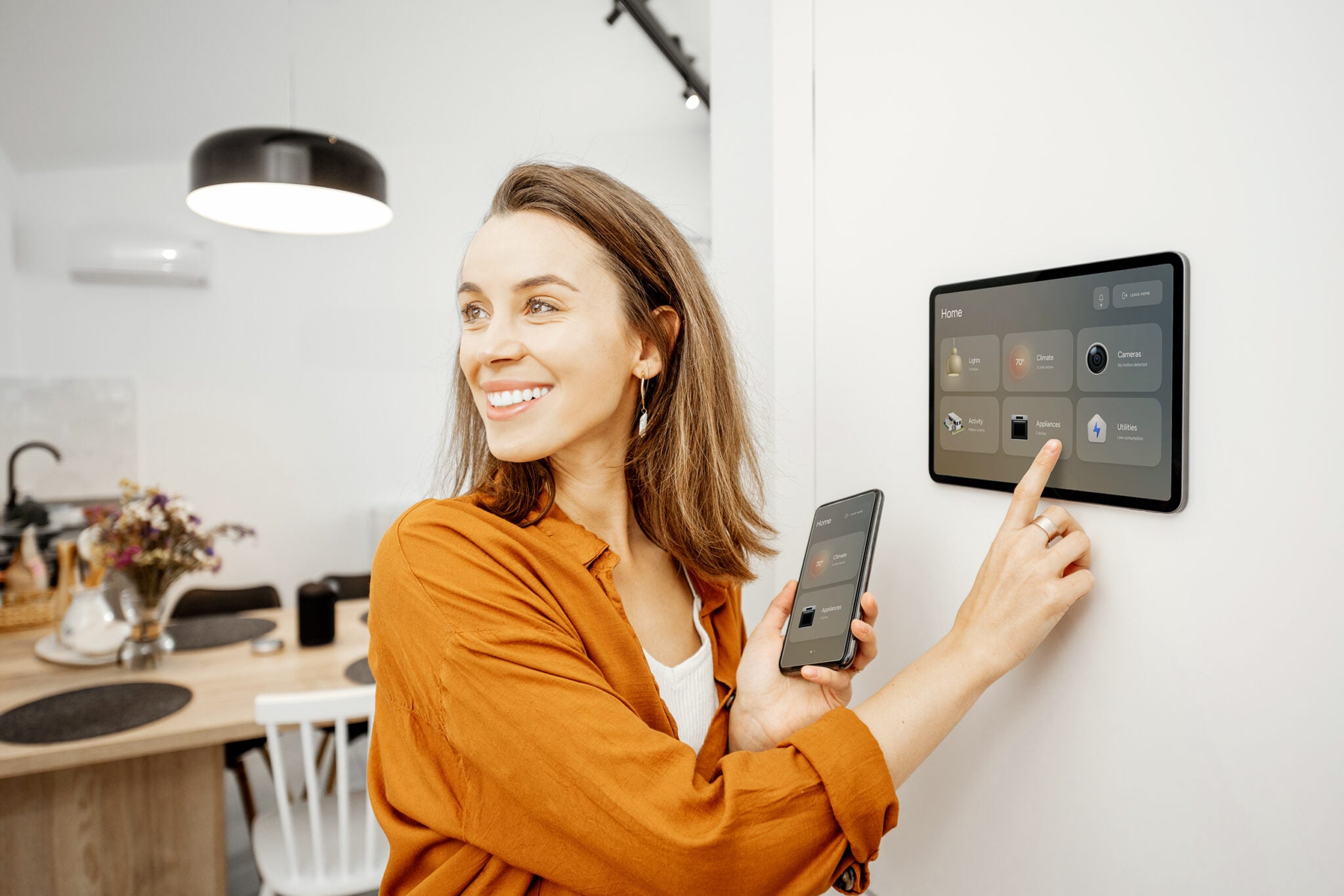
The resident-facing app brings every connected home function into one interface, designed to work across touchscreens, tablets, phones, and computers. Residents can view live data from connected systems and control available home functions without switching between separate applications.
The demonstration home also shows how predefined modes can simplify everyday routines. A night mode, for example, automatically activates selected corridor lighting when needed. These automations are intentionally transparent and user-controlled — the resident decides what the home does, and when.
The longer-term vision goes further. Future versions of the platform could support rental mode, elderly care packages with caregiver alerts, predictive maintenance, and a full ownership data handover when a home is sold. The foundation for all of it is already built in.
A platform built to last for decades
One of the harder problems in connected hardware is longevity. Appliances, sensors, and operating systems age at different rates. A refrigerator bought in 2025 may still be running in 2040, on a network landscape that looks nothing like today's.
The platform architecture provides a foundation for managing integrations as connected devices and systems evolve. Individual appliances may continue to use their manufacturers' own update tools, while future lifecycle management could help ADMARES validate compatibility between device software and the smart home platform as it develops.
The platform also opens a commercial layer. Through an integrated app store model, ADMARES and its manufacturing partners can sell appliance upgrades, replacement parts, and ongoing maintenance subscriptions directly to residents. Beyond hardware, residents can subscribe to services like cleaning or elderly care packages, all surfaced through the same interface.
Our contributions
→ Software design and development of the resident-facing smart home platform
→ Development of a responsive web application for touchscreens, tablets, phones, and computers
→ Edge platform architecture using an industrial device based on NVIDIA Jetson Orin NX
→ Integration of connected home systems into a unified resident interface
→ Design and implementation of user-controlled home modes and automations
Contact
Let's build your next innovation

Marko Sibakov
VP, Reaktor Cross-industry