
Summary
Paper checklists have long been the backbone of ship operations, but their limitations carry real consequences at sea. We partnered with NAPA, a pioneering supplier of maritime software, to replace paper-based checklist operations with a smart digital tool that delivers fleet-wide visibility, enabling proactive maintenance, faster decision-making, and more vigilant risk management in the future.
Project highlights
150+ user interviews
Our research spanned 15 ships and 150+ people worldwide
Collaborative development
A digital checklist tool shaped entirely by what crews actually need
Full visibility
Fleet operators now have a unified view of their ship’s status
Increased accuracy
The tool saves time and significantly reduces errors
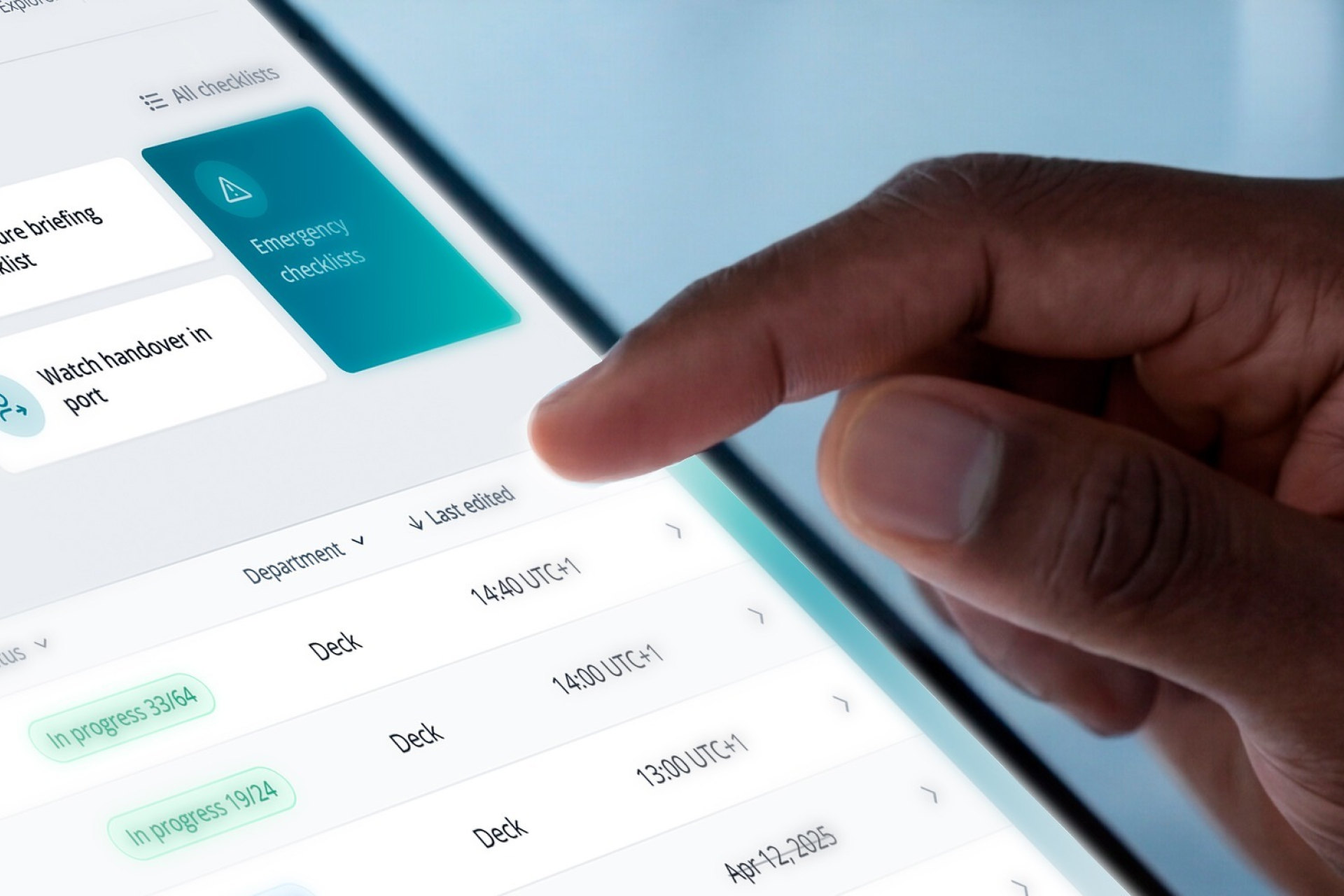
NAPA puts the world’s fleets in motion
NAPA builds the software that keeps ships running across the seas. Its products span all aspects of a ship's lifecycle, from hull design to fleet intelligence and beyond. A pioneer of ship operations technology, NAPA delivers data-powered solutions to the world’s leading yards, fleets, and regulators.
The team at NAPA wanted to replace physical to-do lists with something smarter, while also reimagining an existing software. And in doing so, they sought to develop a new digital tool that would connect crewside operations to the shoreside control room faster.
Together, NAPA and Reaktor designed a system built for the real complexities of life at sea. The tool supports the people who run the world's largest fleets with clear, fast, and reliable visibility into critical tasks on board the ship. It streamlines operational processes while maintaining regulatory compliance.
Why do some legacy systems prevail?
In the maritime industry, paper checklists are used to track ship operations, such as routine safety and equipment checks. Reliance on them poses a significant risk of human error. Crew must use physical checklists to complete daily tasks and then enter the data into digital systems later.
The administrative burden is high. Forms are filled out incorrectly, data can go missing, and whenever a procedure changes, shoreside staff must manually email the entire fleet new checklists to print and distribute. Due to intermittent internet access at sea, ships in the same fleet operate on different versions of the truth.
Considering the high margin for error, why do outdated paper checklists still prevail? Our team of NAPA and Reaktor experts collaborated to untangle the nuances of crewside operations and define the needs on board a ship.
Define, design, sail, repeat
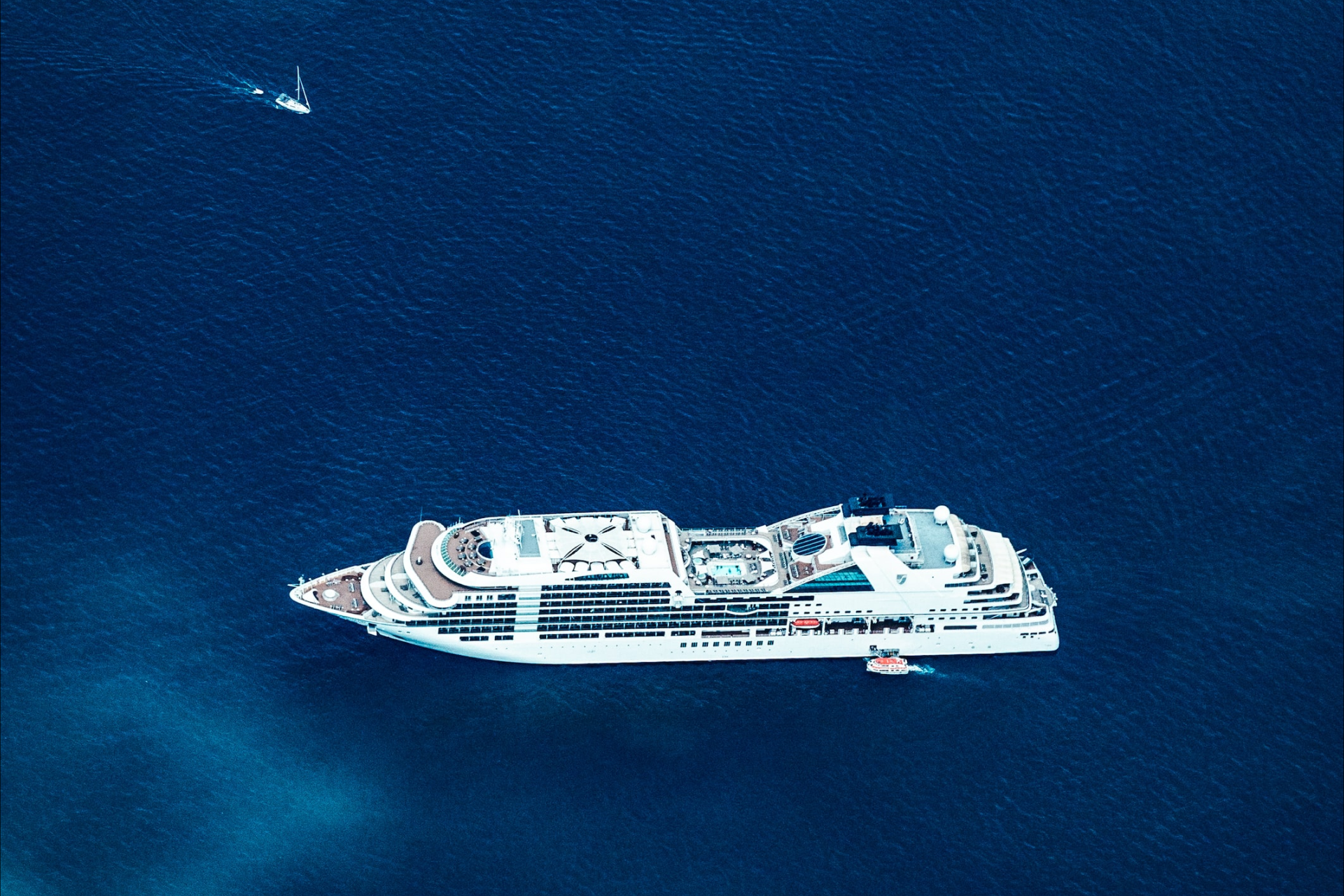
Understanding life at sea meant going to sea. We embarked on a global research effort, visiting 15 ships from the Mediterranean to the Gulf of Mexico, to conduct structured interviews with officers of all ranks. We sought to understand the friction points, workarounds, and unmet needs embedded in the existing ways of working.
Using prototypes as a live research tool, we gathered in-person feedback from the crew in their working environment and continuously refined the product based on what we observed and heard. Those findings shaped everything. Working alongside NAPA's designers and developers, we developed a pilot version of the digital checklist, which was tested iteratively directly on board ships around the world.
One constraint fundamentally shaped the product: ships at sea often have unreliable internet. The tool had to work just as well offline as online, or it would never truly replace paper-based checklists.
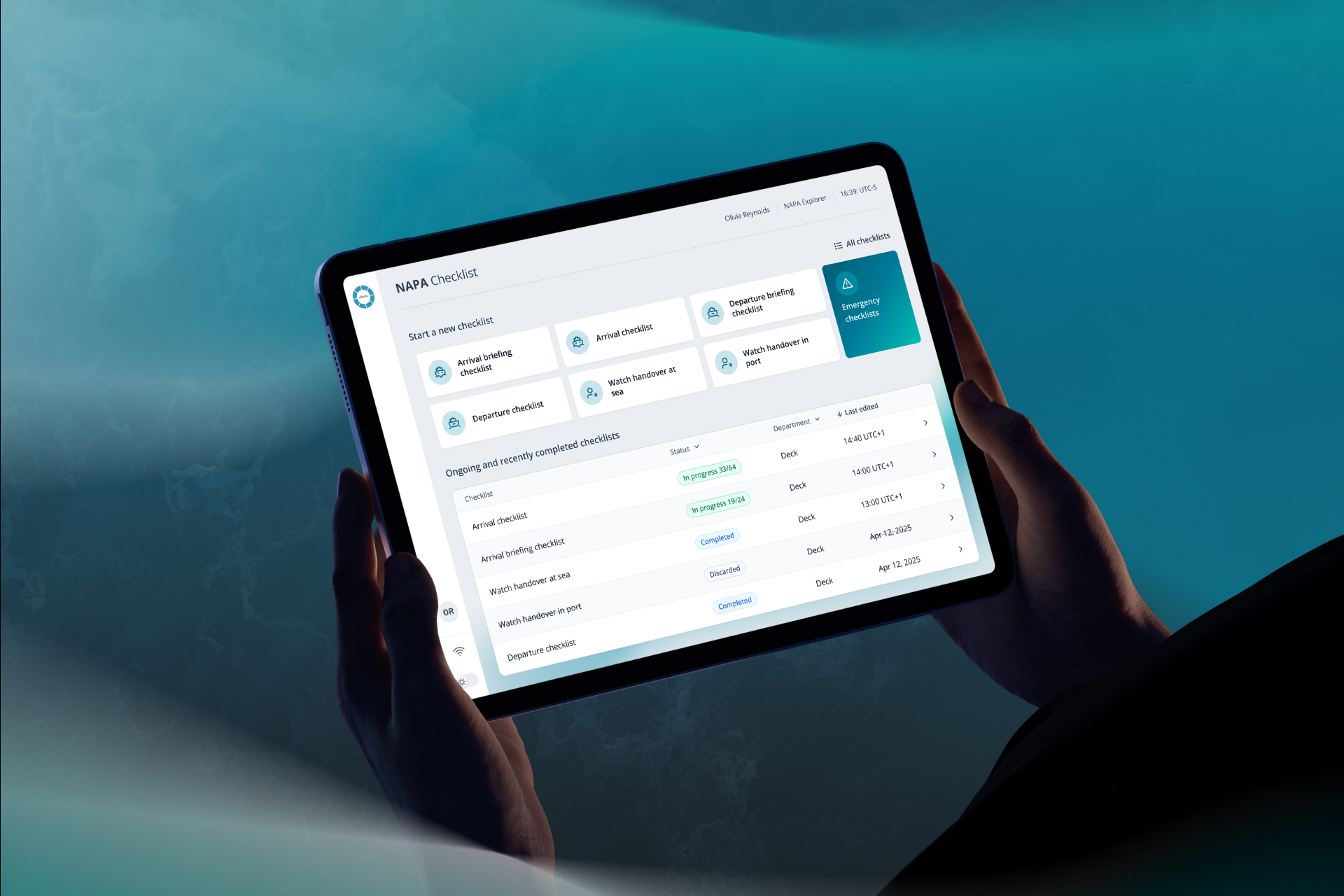
A digital checklist for life at sea
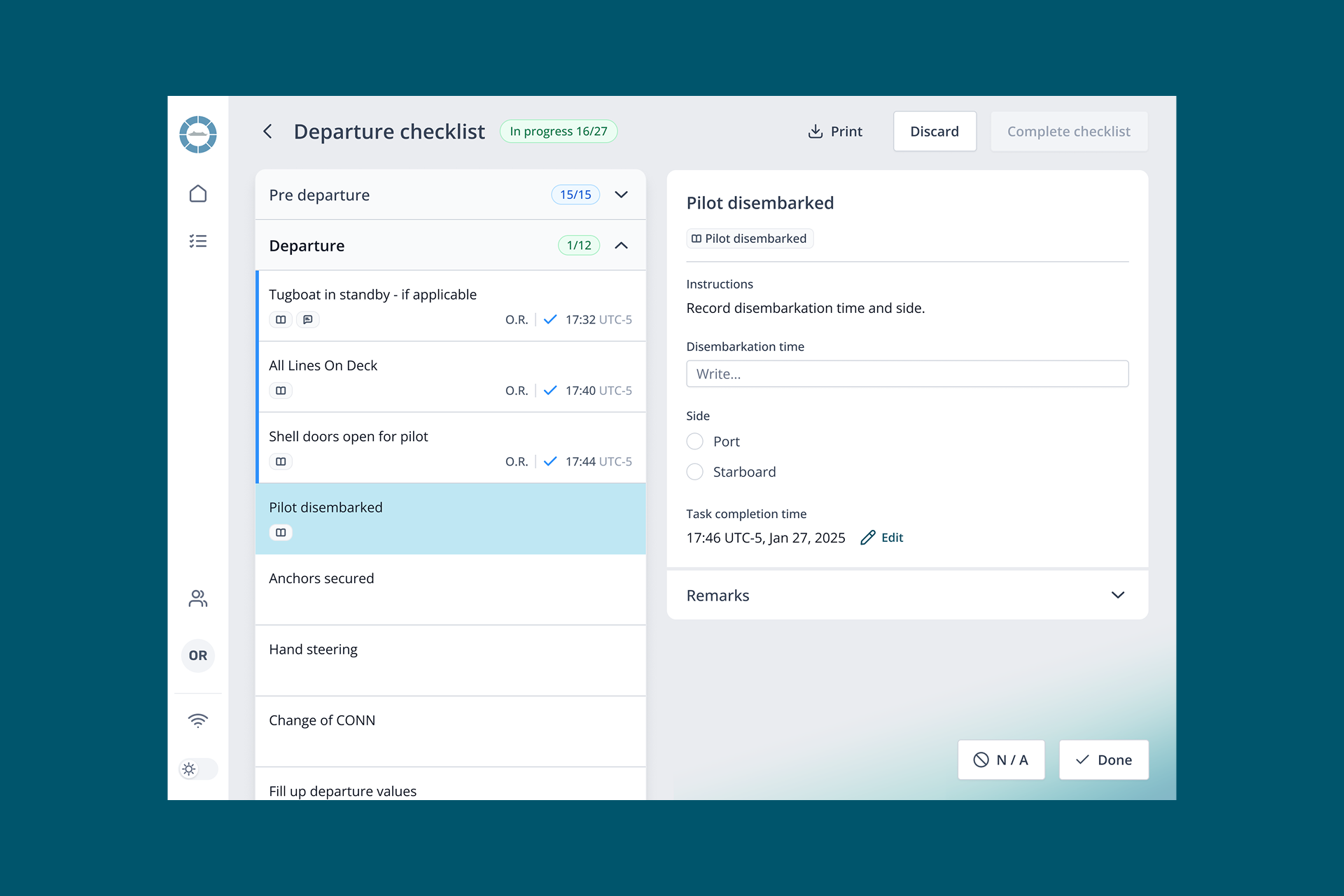
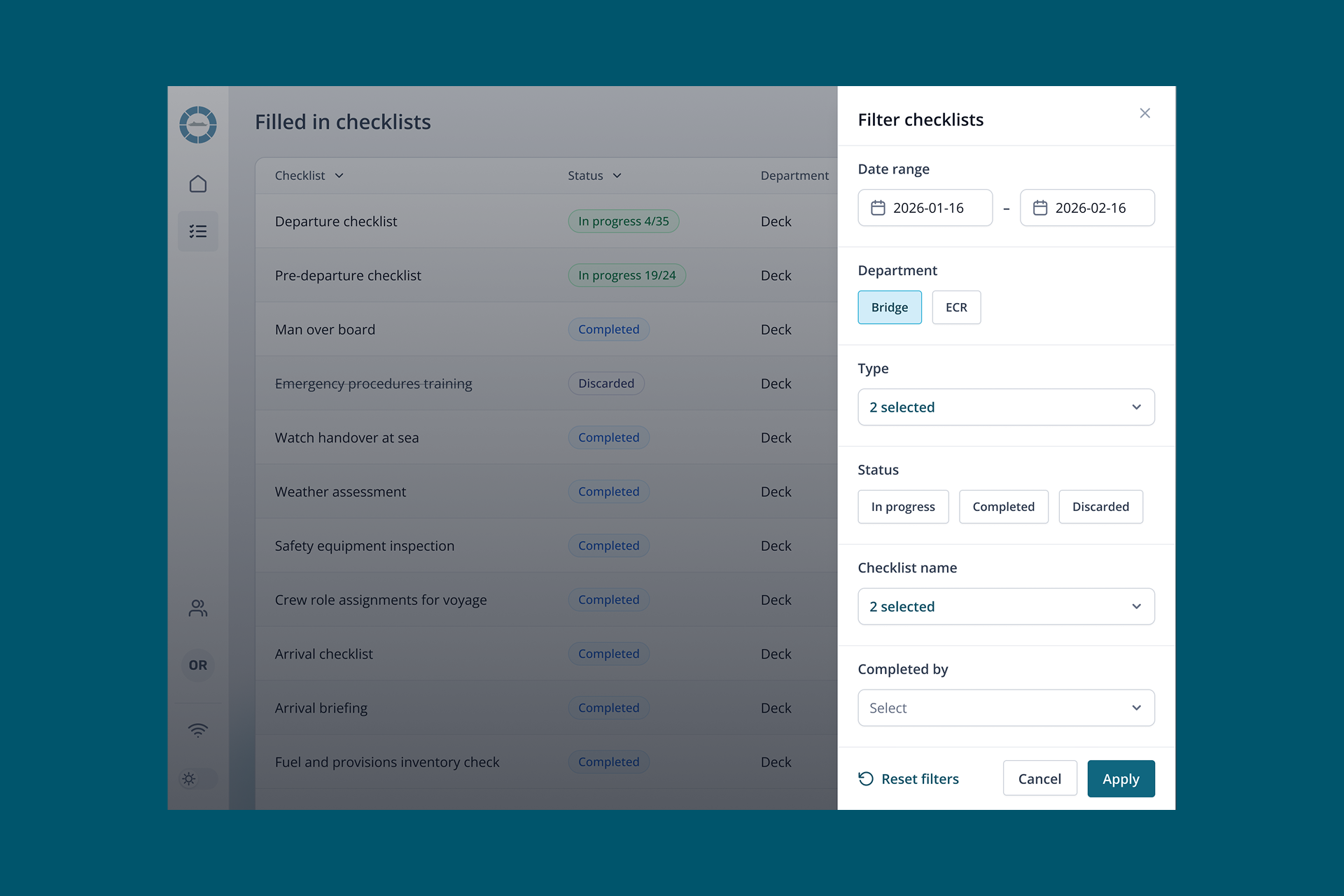
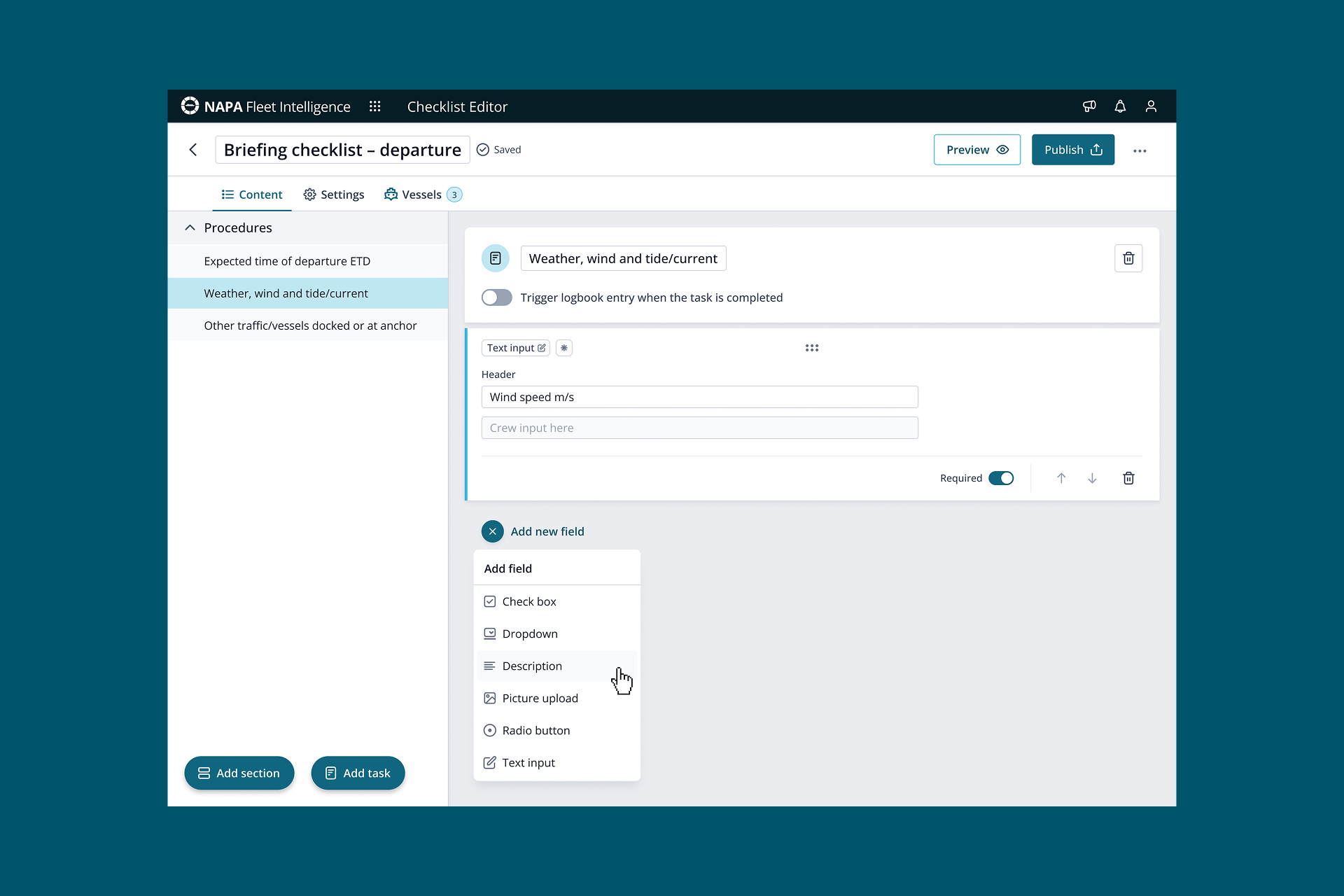
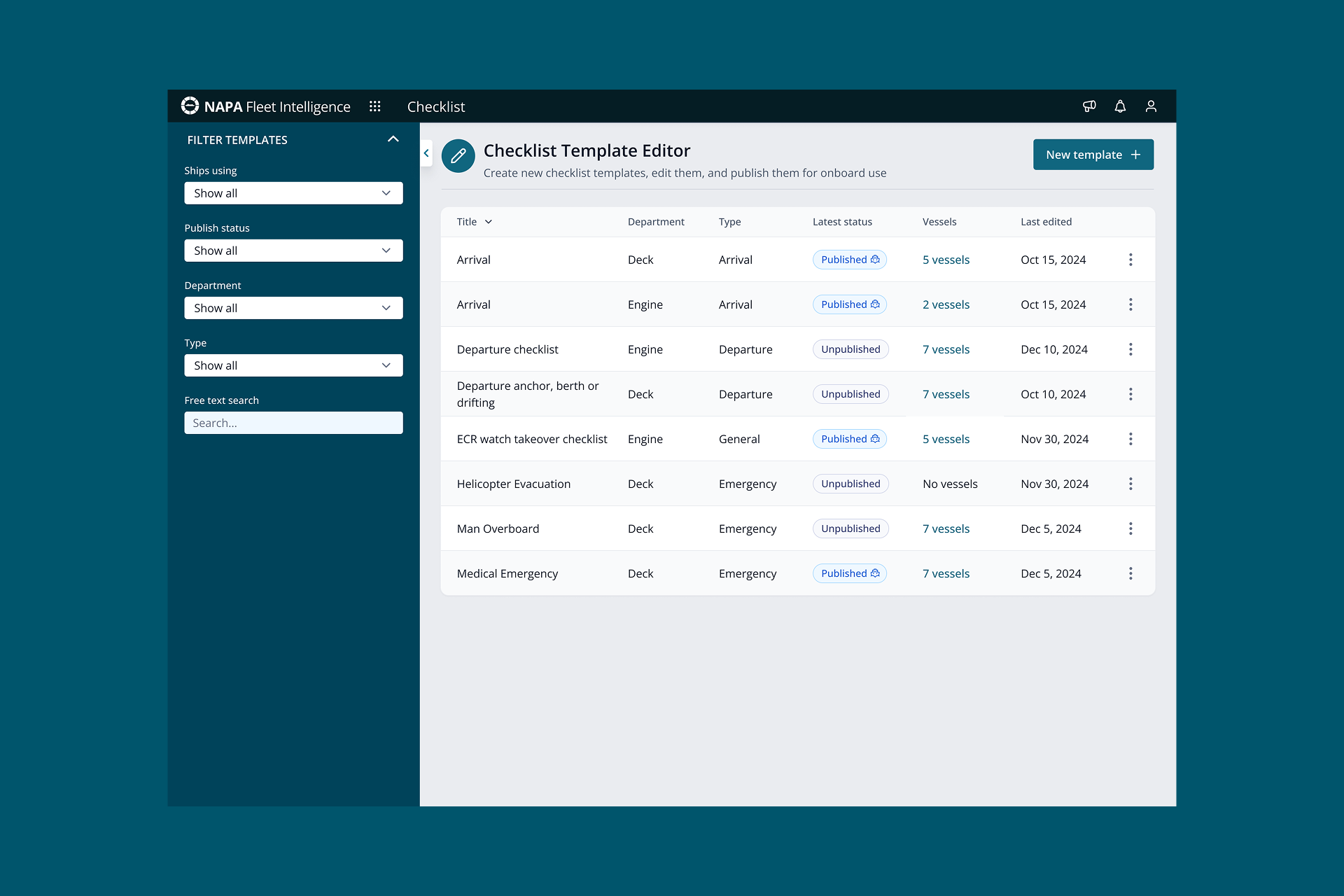
The result is a digital checklist shaped entirely by what crews actually need. Ship-specific publishing controls, user management restrictions, and a software editor that automatically sends information to the digital NAPA Logbook. The tool aims to reduce manual work and cognitive load. Each feature earned its place through iterative testing.
AI supported the build throughout. Our developers used it to identify use cases and test the tool. Our designers also used it, for example, to build prototypes and make sense of complex regulatory data.
On the technical side, we built the digital checklist tool using traditional, recognizable systems to ensure full compatibility with ship infrastructure, which relies heavily on Microsoft Windows. The tool slots into NAPA's Fleet Intelligence dashboard as a module, works across every device from handheld crew tablets to shoreside control room computers, and updates in the moment a task is marked complete.
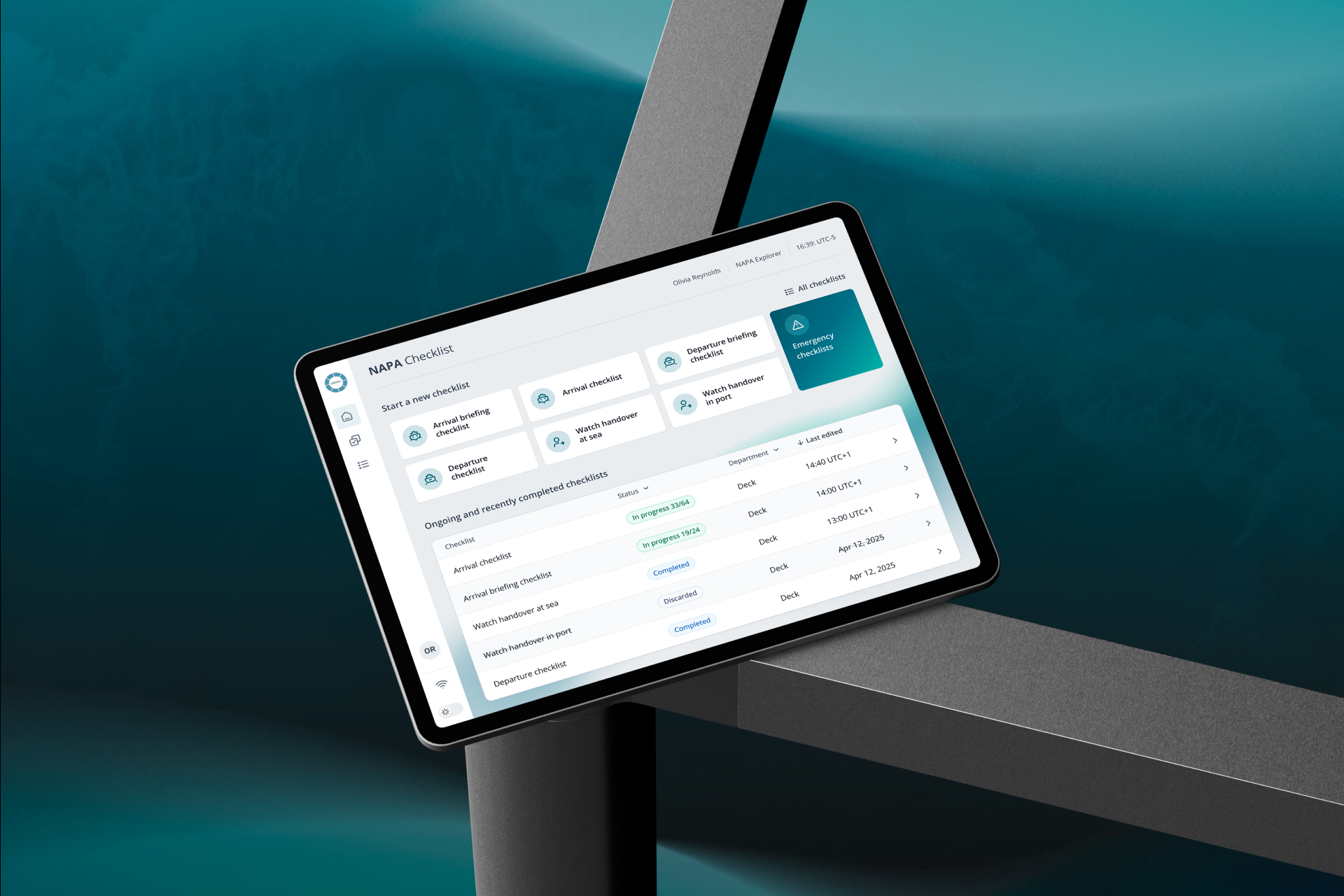
A steady tool for constant change
One of the major challenges in the industry is the effective distribution of information to ships at sea. This is because they have unreliable satellite internet, are constantly on the move, and often change time zones.
The new tool handles these challenges seamlessly, logging results in the local time zone and enabling offline functionality. It also improves efficiency by automatically transferring information from the checklist to the logbook, eliminating the previous need for users to manually input data from paper.
And even if the network goes down, the software is built to accommodate guaranteed offline resilience, ensuring continuous functionality no matter the situation.

The results
Now, fleet operators now have a single, unified view of their ship’s status, from bridge to engine room. And feedback has been overwhelmingly positive.
On board, the digital checklist tool saves time, eliminates incomplete forms, and significantly reduces errors. Shoreside, teams now have instant fleet-wide visibility. The software paves the way for deeper analysis in the future, potentially enabling proactive maintenance, faster decision-making, and trend analysis.
"The new checklist app is really easy to use, looks very good, and fits very well with our daily operations. It also reduces the workload a lot with automatic logbook entries"
Chief Navigation Officer
For NAPA, the ability to deploy software remotely, without flying staff out to board each vessel, has been an added advantage.
"The difference is between digitizing and digitalizing. Putting a paper checklist on a screen changes nothing on its own. Changing the workflow itself does. Our goal is always to reduce the load on the people doing the work, not to add another system."
Sami Koponen, Product Owner, NAPA Checklist, Safety Solutions
It’s been thrilling to work alongside NAPA to evolve a system that underpins the world's largest fleets. We're continuing to refine the tool together, building on everything we've learned at sea to deliver sharper, smarter, and faster technology as NAPA extends its reach into new markets.
Our contributions
→ Strategic planning
→ Research and development
→ Service and product design
→ User testing
→ Stakeholder interviews
→ Distributed software development
→ Other tools: Angular and C#