Summary
Alaska Airlines is recognized for its commitment to the guest experience, and its latest investment extends that reputation to the sky: free ultra-fast Wi-Fi on every flight by 2027, thanks to T-Mobile and powered by Starlink. We designed and delivered the connectivity portal at the heart of the service, an experience that gets guests online in seconds and carries both the Alaska and Hawaiian brands at cruising altitude.
Built and launched in just over six months, it's among the first full-featured free Starlink portals in commercial aviation, already flying on all regional, select Alaska Airlines mainline and all trans-Pacific Hawaiian Airlines flights.
Highlights
Live in just over six months
From kickoff to launch across two fleets, the portal went from blank page to cruising altitude in just over half a year.
Unique brands, one portal
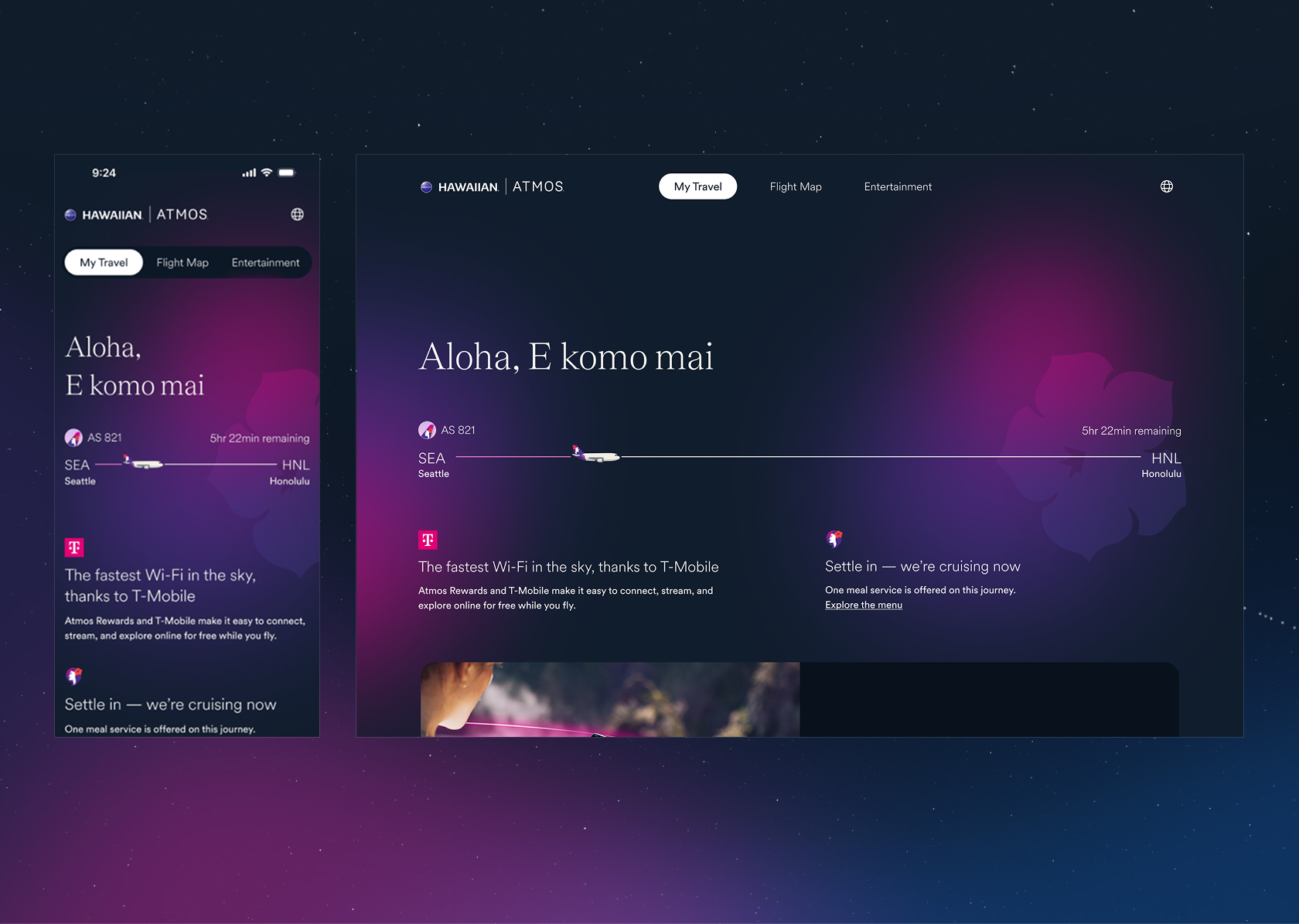
One portal delivers brand-true Alaska and Hawaiian experiences across four operating airlines, detected tail by tail.
Connected in seconds
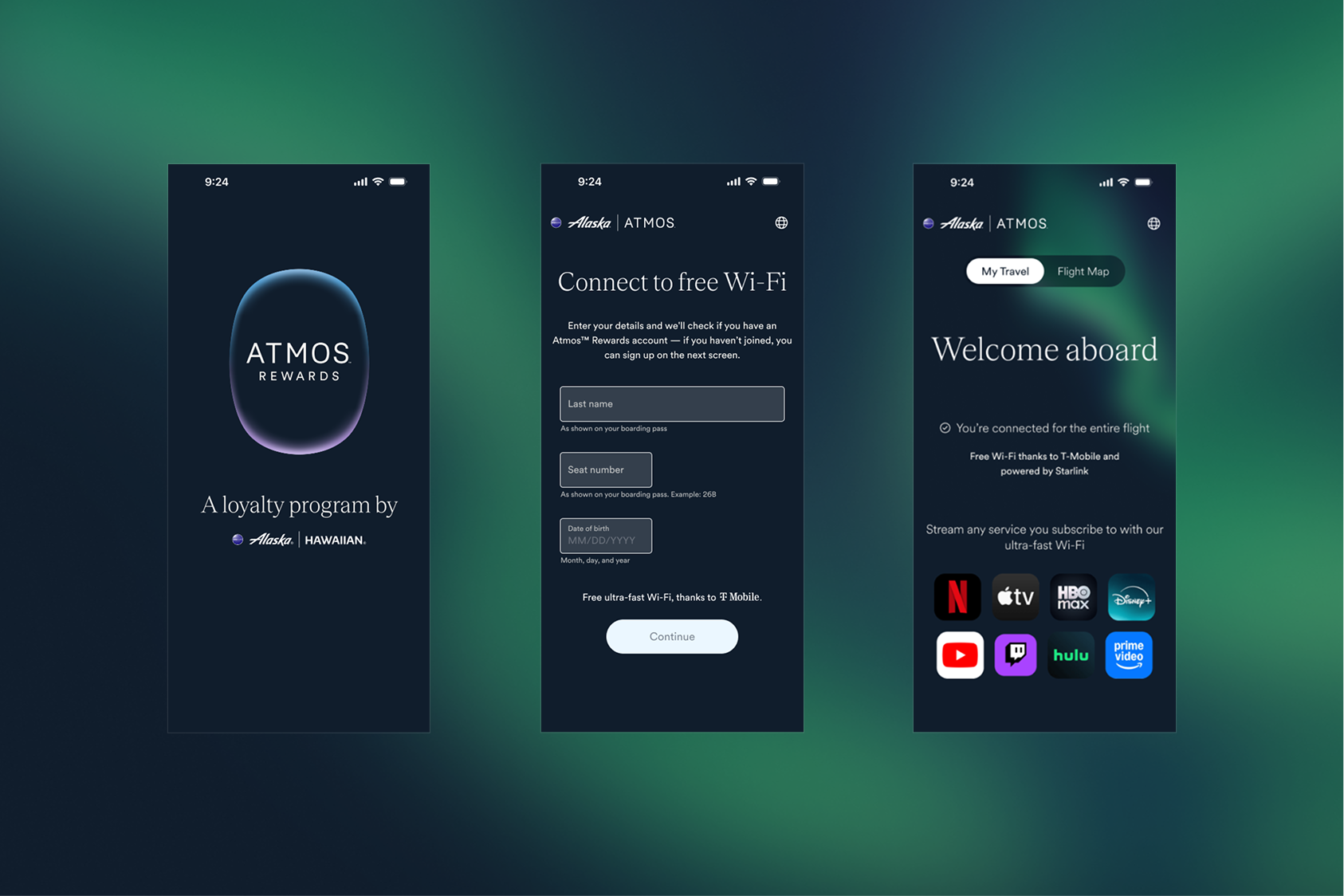
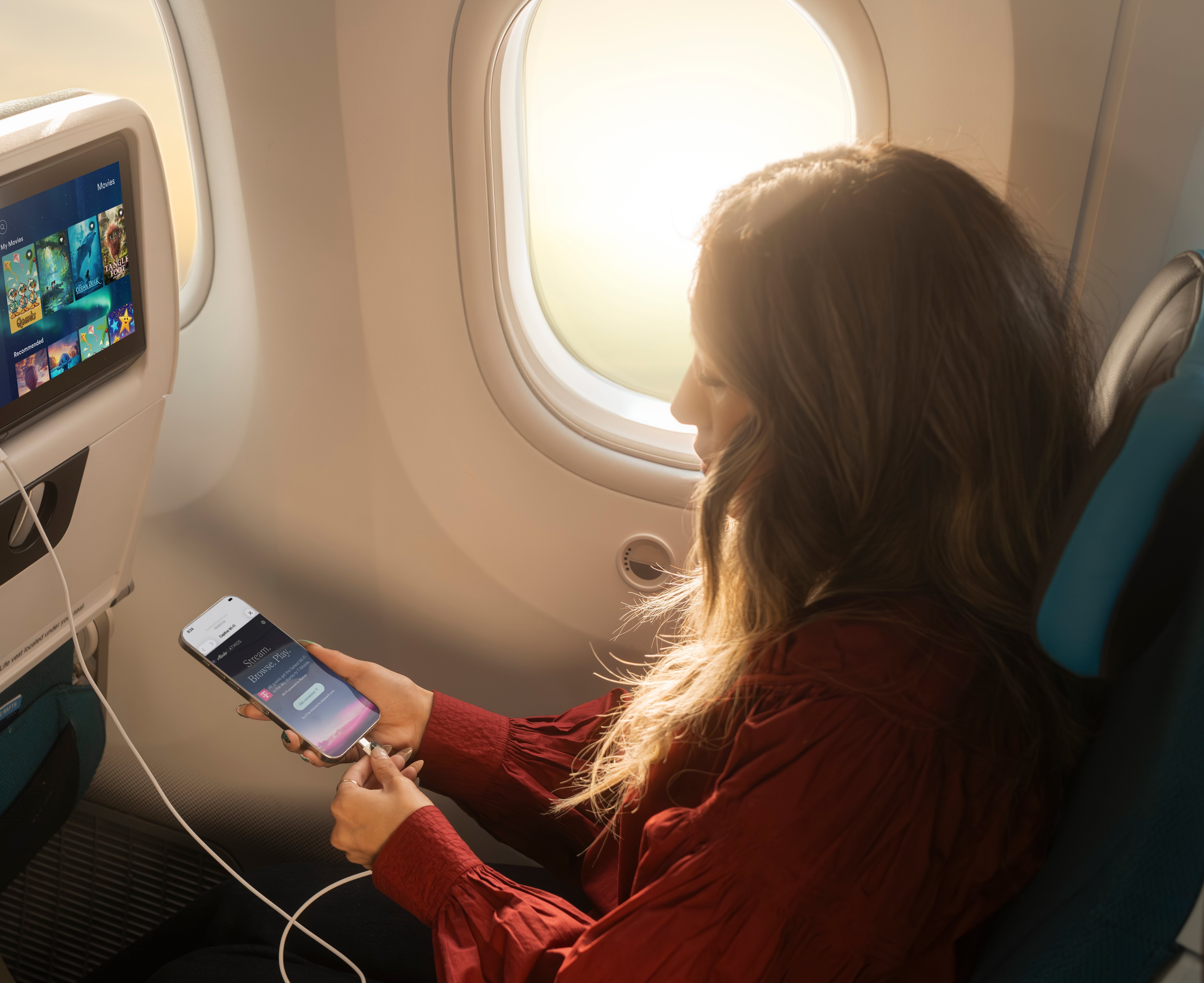
Guests validate their Atmos Rewards account with their name, seat, and date of birth. If they don’t have one, they can create one on the spot in seconds then move straight to streaming, gaming, or work.
Content updated mid-flight
Copy, images, and magazine articles pulled live from a CMS, so the portal stays as current as the airline's own website.
A premium brand, extended to the cabin Wi-Fi
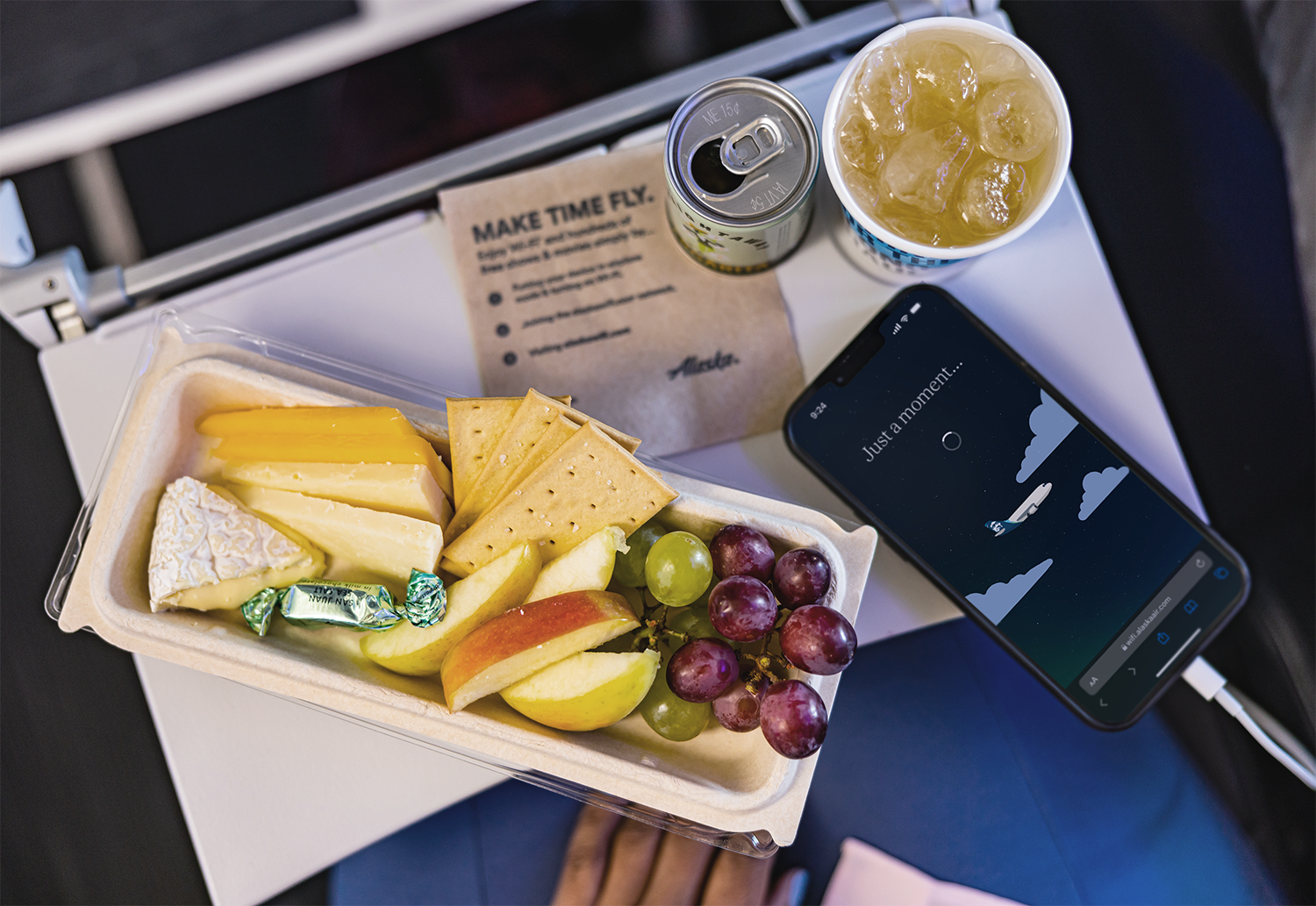
Alaska Airlines competes as a premium carrier with a sharp eye for guest experience, right down to the boarding music and their renowned Pacific Northwest fruit and cheese plate. Following its acquisition of Hawaiian Airlines, the company committed to free ultra-fast Wi-Fi across the entire combined fleet by 2027. The connectivity portal is the front door to that promise, and the first digital moment guests share with the brand onboard.
The bar was set accordingly. A guest experience this central couldn't feel like a login page bolted onto a satellite link. It had to feel effortless, look unmistakably like the airline, and keep pace with the fastest connection in the sky.
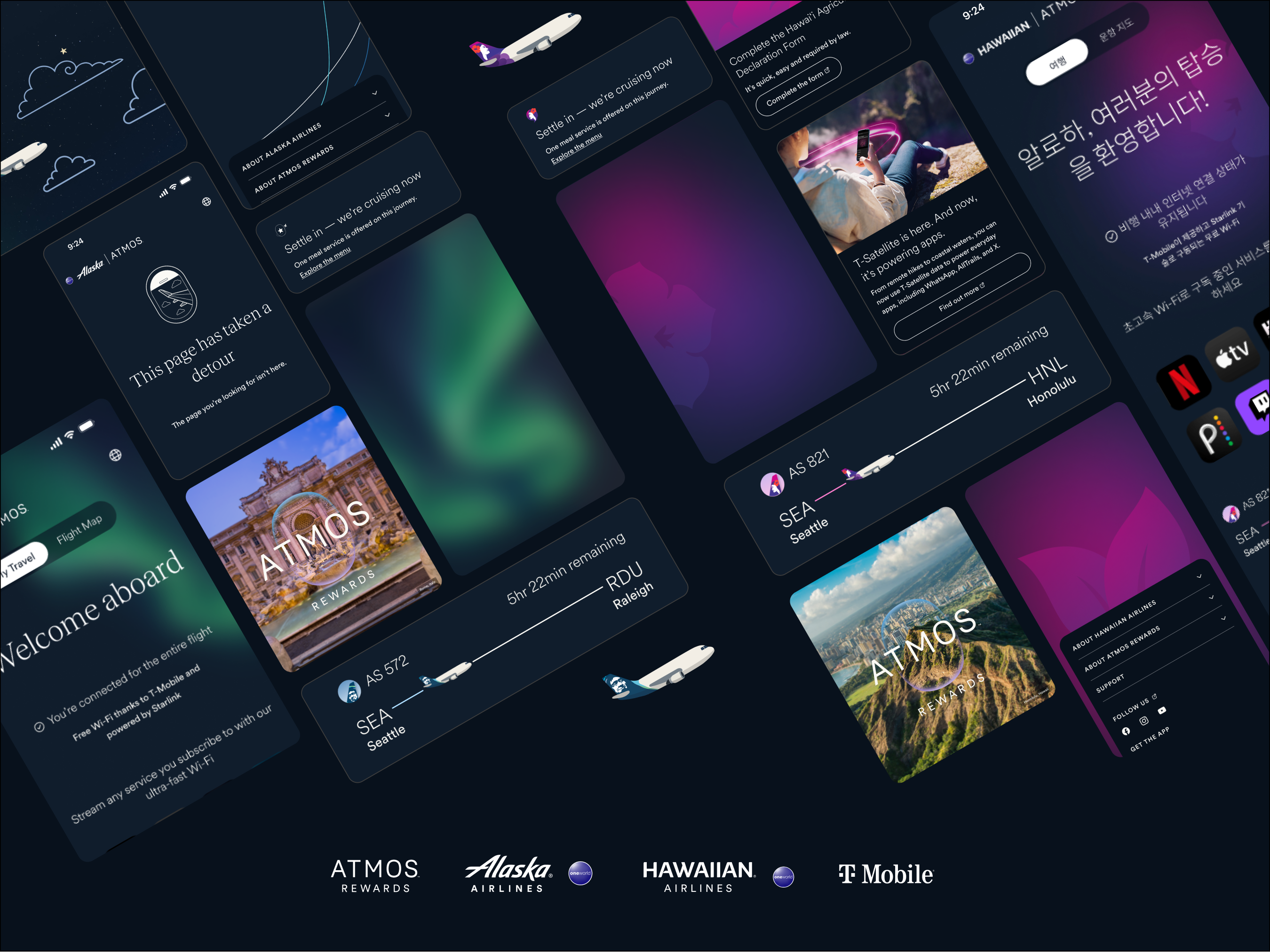
Shaped in workshops, long before the first screen
We were brought in for our product knowledge as much as our delivery capability, consulting closely with Alaska's product owners on what the portal should be before a single screen was designed. In shared workshops, we brought together people from across the airline, from cabin experience and loyalty to brand, digital, and engineering, to define what the product should become and prioritize the features that would set it apart.
The workshops distilled the values that would guide every decision. Passenger value through connected calm was particularly important, alongside a sense of control, brand delight, personalization, continuity, and easing anxiety and boredom.
Those values met a real business model. T-Mobile's partnership earns a moment of attention, both brands earn visibility, and the portal invites guests into Atmos Rewards, the combined loyalty program for Alaska and Hawaiian. Rather than treating those as competing demands, we designed each one to do its job quickly and gracefully, so the flow reads as a warm welcome instead of a toll booth. Success, as the whole team defined it, is a guest who gets connected fast, feels taken care of, and comes back to the portal because they want to.
We worked as one team with Alaska's product owners, aligned on a single goal: the best passenger experience the industry has seen from a connectivity portal.
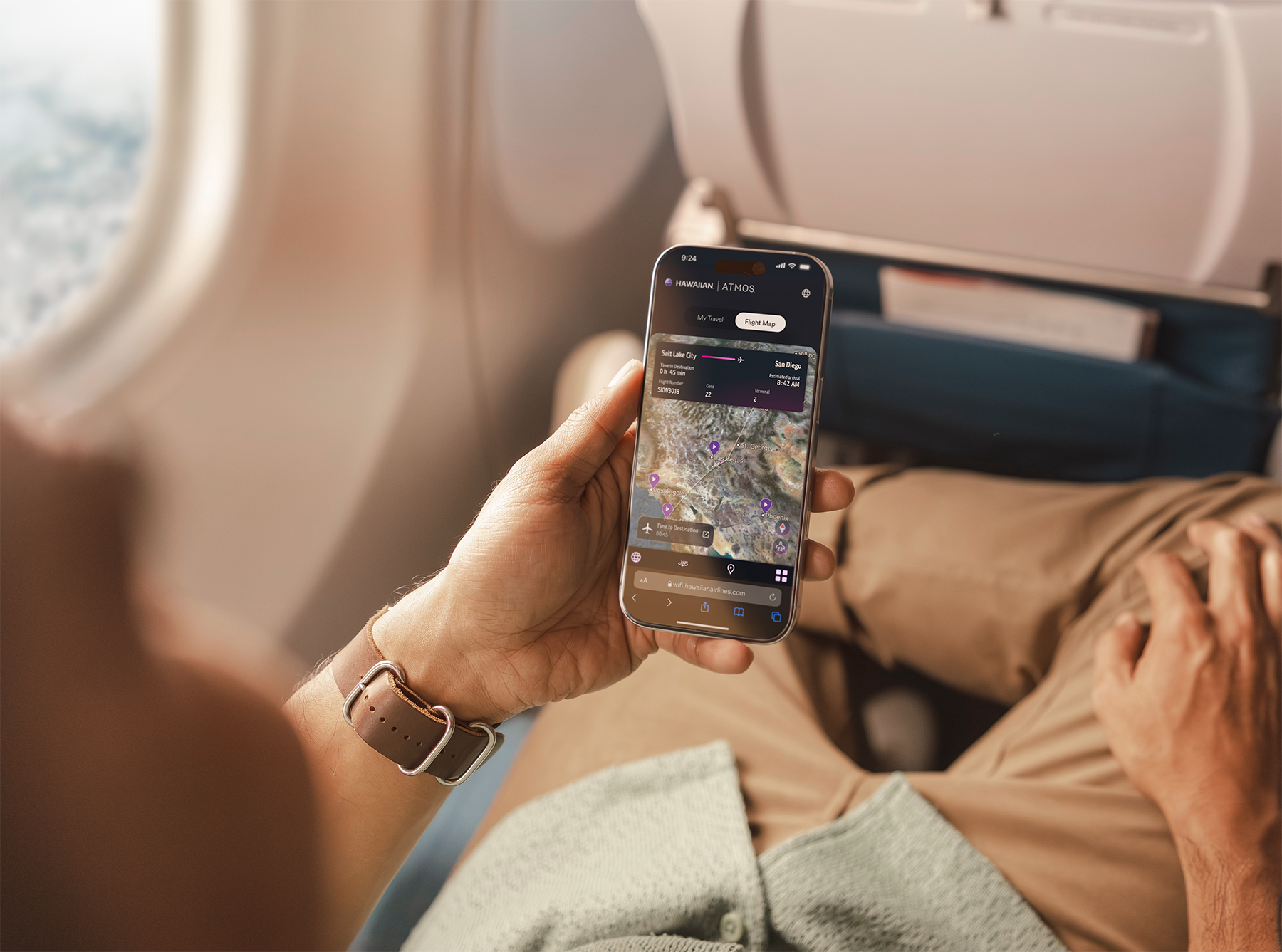
Architecture for the LEO era
Starlink retires the reference architecture the industry has spent 15 years refining for GEO connectivity. With no onboard server, the portal is ground-hosted, and latency budgets and content bundling no longer drive the design. What remains is everything aviation still demands: resilience to intermittent links, multi-fleet brand logic, and a data feed far thinner than a traditional avionics integration, since Starlink exposes only latitude, longitude, and a router ID.
We built the resolution layer that derives full flight context from that router up, and an architecture that knows whether a tail flies for Alaska, Hawaiian, Horizon Air, or SkyWest and serves the right brand every time. The same foundation lets the airline run experiments tail by tail, comparing versions of the experience in revenue service the way a web team would run an A/B test.
Ground hosting also unlocked a first for us: all portal content, from brand imagery and advertising to Hawaiian's magazine articles, is pulled live from a CMS rather than bundled and synced to the aircraft. A current credit card offer can be switched in from the ground and reach passengers mid-flight, on every aircraft at once.
Hawaiian was Starlink's first customer in commercial aviation, and the team has pioneered each new software update since. Our engineers and designers worked from maintenance hangars to catch issues before passengers met them, shipped a fix within a week when an iOS update fundamentally altered the captive portal flow, and built the diagnostic evidence that pinpoints faults across the full connectivity chain. It's the kind of expertise that sometimes means running packet analysis from an economy middle seat, isolating a fault before the descent begins.
Onboard, in seconds
The experience begins the moment a guest opens their device. Sign-on takes a name, a seat number, and a date of birth, a method that keeps the flow short and secure without leaning on vulnerable session tokens. Behind that simplicity sits a flow that handles existing Atmos members, new enrollees, minors, returning devices, and multi-device travelers, each behaving differently, with none of the friction of a conventional username, password, and multi-factor login.
A brief sponsor moment later, the guest is online. An Atmos Rewards account is the key to free Wi-Fi across both fleets, and enrolling happens right in the flow, turning every flight into a reason to join.
From there, the portal opens up. Guests pick up the series they started at home, with the portal pointing them straight to their own streaming platforms. They can play games, catch up on work, or stay connected with friends and family over a link fast enough to forget it's routed through space.
The most loved feature on any connectivity portal is the map, and this one, developed by FlightPath3D and served from the ground, is fuller-featured than an onboard system could carry. We worked alongside Alaska to bring the map across the finish line and into the airlines' own brand colors, so it feels native to the portal rather than embedded in it. Its value runs deeper than curiosity about which state is below. For the many passengers who feel anxious in the air, seeing the journey unfold restores a sense of time, place, and control.
Each brand fills the portal with its own voice. Hawaiian guests browse the airline's magazine stories on their way to the islands, because as the airline puts it, the vacation begins the minute you step on the plane. Alaska guests get an experience tuned to the brand's West Coast character, with curated content built for the journey.
"We set out to create a sign-on experience that feels effortless for our guests and matches the quality of our ultra-fast onboard Wi-Fi. Reaktor has been an exceptional partner in helping bring that vision to life."
David Scotland
Director of Cabin Experience, Alaska Airlines
Results
Passengers connected since launch
months from kickoff to launch across two fleets
airlines served under two brands, from one portal
Headline
→ Product strategy and concept design for one of the first full-featured Starlink connectivity portals
→ User experience (UX) and visual design across the Alaska and Hawaiian brands
→ Three rounds of UX testing with Alaska's research group, covering the captive portal, visual decisions, and passenger identification, with production data informing each release
→ Frontend and backend development of a ground-hosted, multi-brand portal
→ Real-time CMS integration for brand and advertising content, manageable without developers
→ Tail-level brand detection and experimentation tooling across four operating airlines
→ Diagnostics and fault isolation across the connectivity chain, in partnership with Alaska and Starlink
contact
Let's get your ideas flying

Dan DeCoste
Business Director, Reaktor Aero