Summary
RAVE Aerospace has been designing in-flight entertainment and connectivity (IFEC) systems for airlines worldwide since 2011, with their seat-centric RAVE system now installed on thousands of aircraft.
The RAVE Open Platform was built to let third-party teams develop user interface experiences within their ecosystem. To demonstrate that, they needed a partner who could work inside their architecture and execute to airline-grade design standards.
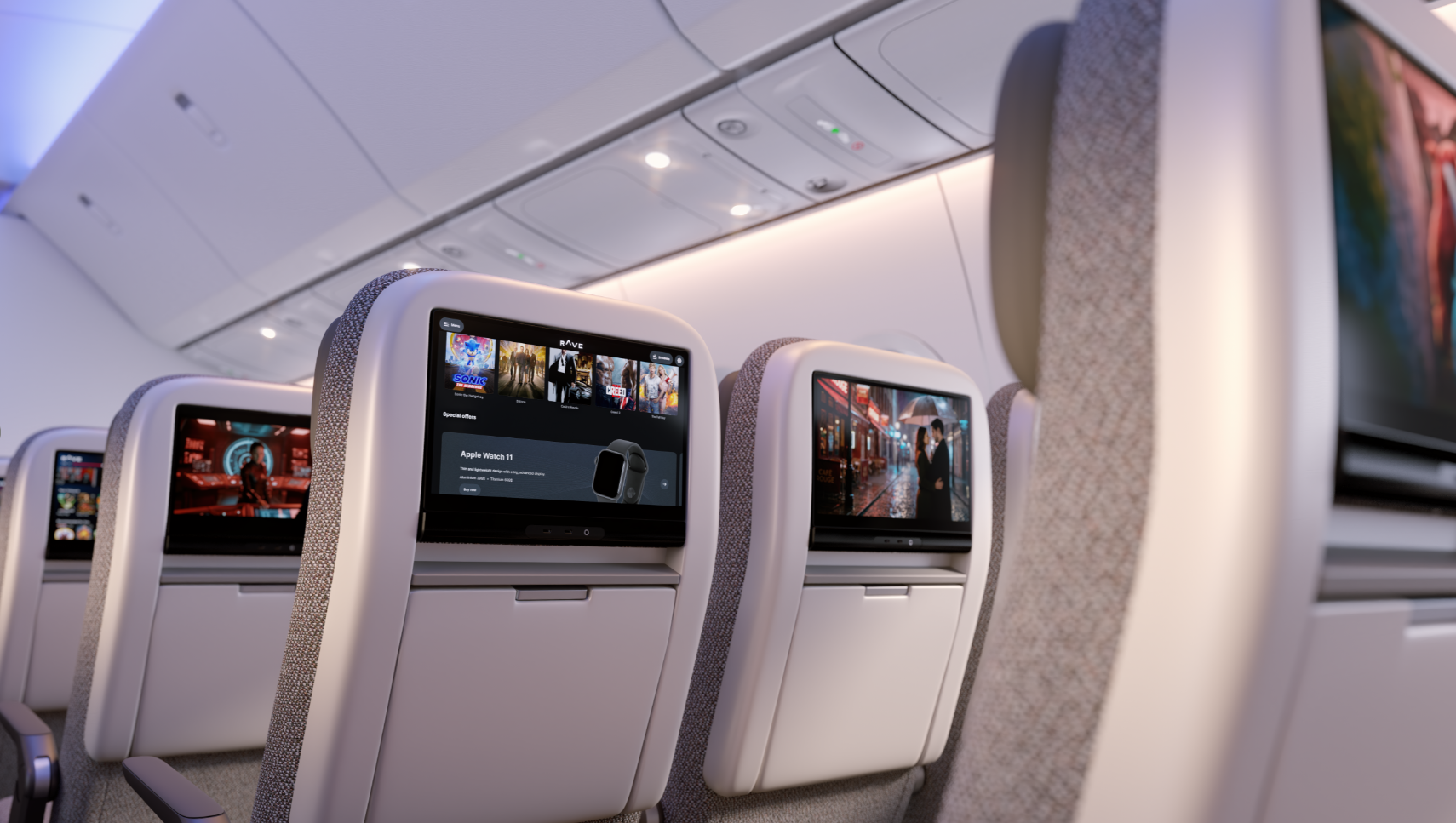
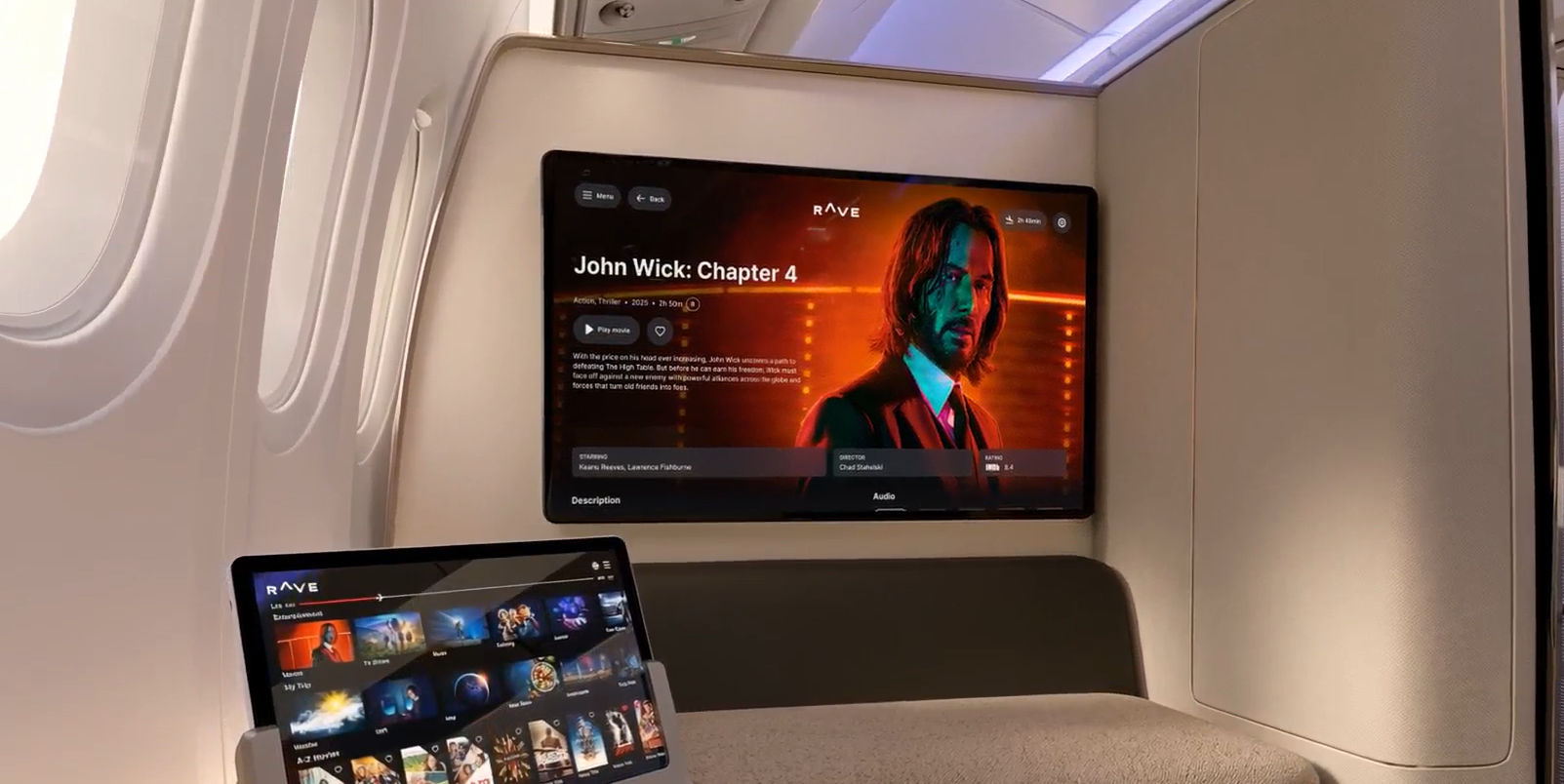
We designed and built the RAVE Next Generation GUI concept, a graphical user interface (GUI) that puts RAVE's vision for passenger-facing IFE screens into a working, demonstrable form – built to reflect what real airline passengers need.
Highlights
Open platform, proven
The first working demonstration of a third-party team building a production-level GUI within the RAVE ecosystem.
Passenger-first design
A clean, contemporary interface giving generous space to widgets, entertainment browsing, and content discovery.
Built for configurability
A UI framework designed to support airline-specific branding, content priorities, and passenger experience needs.
IFE expertise, applied from inside
Airline UX knowledge contributed directly within RAVE's platform architecture and aligned to their product roadmap.
A platform that needed a proof point
RAVE has spent over 15 years refining one of aviation's most widely deployed IFEC systems. The RAVE open platform is the next step: a framework that lets external teams build advanced interfaces inside the ecosystem. Turning that from a proposition into something you can put in front of an airline required a partner who could integrate into an unfamiliar architecture, align with an existing product roadmap, and deliver something that reflected RAVE's priorities throughout. That's the work we took on.
Building inside the RAVE ecosystem
We operated within RAVE's architecture from the start, navigating its technical constraints and contributing feedback that helped make the platform more accessible for third-party developers. Design and engineering decisions alike stayed aligned with RAVE's product direction.
The collaboration also surfaced something useful beyond the demo itself: a clearer picture of the platform's readiness for production-level integrations and what third-party teams can build within it.
“Our goal with the RAVE open platform is to enable collaboration. Our work with Reaktor on this project illustrates how external partners can design and develop graphical user interface experiences within the RAVE open platform. It demonstrates the platform’s readiness to support real-world integrations and highlights how third-party teams can contribute advanced UI concepts, reinforcing the openness and flexibility of the RAVE ecosystem.”
Ben Asmar, VP Product & Strategy at RAVE Aerospace
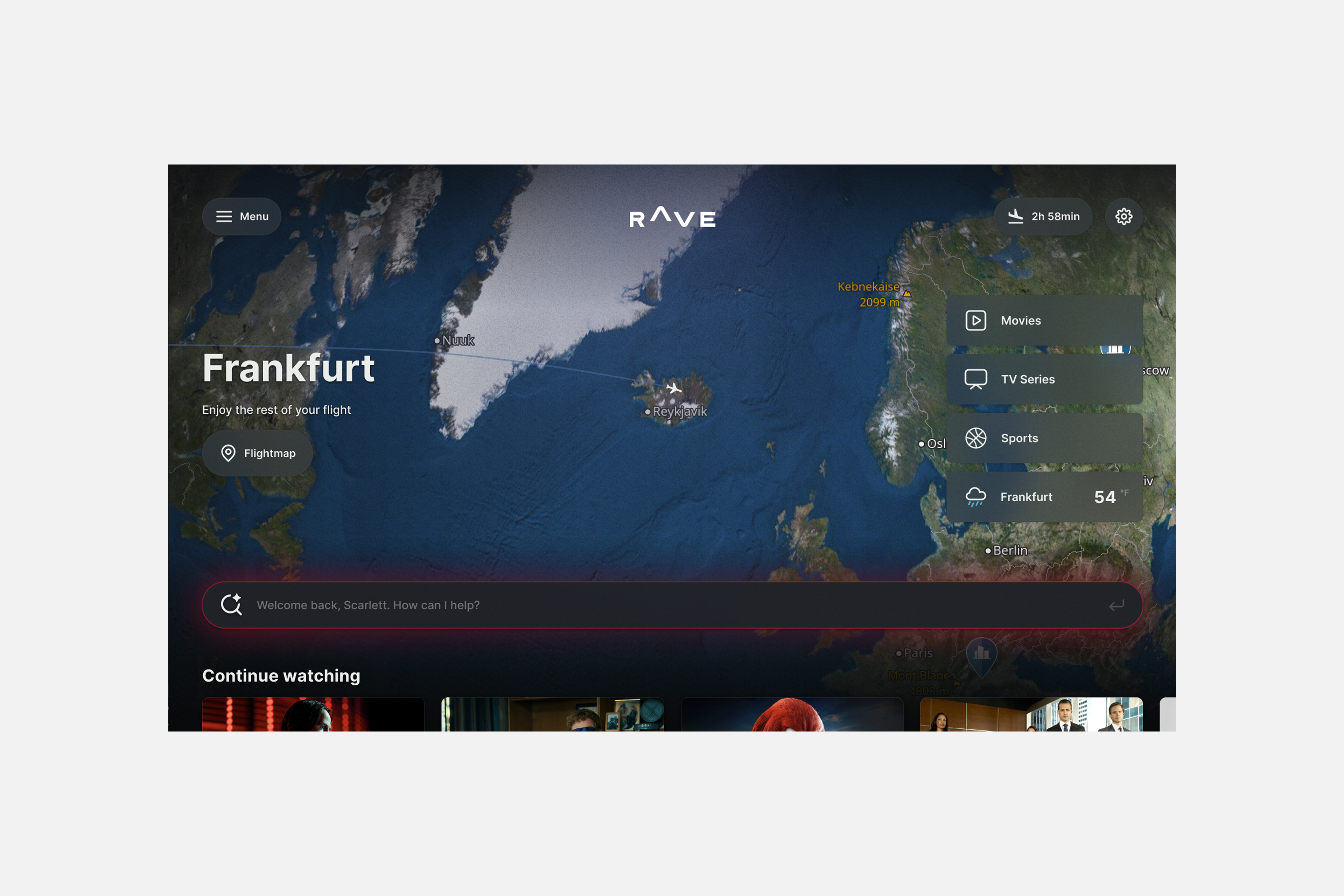
Designed for the passenger, configured for the airline
The demo presents a contemporary IFE interface, clean and uncluttered, with space given to what passengers actually want: easy entertainment browsing, clear content discovery, and widgets that serve the journey rather than crowd the screen.
Configurability was central to the design approach. RAVE's vision is a platform that airlines can tailor to their own brand identity, content strategy, and passenger experience goals. Our work demonstrates what that looks like in practice: a fully realized interface built on RAVE's open foundation, ready to take on an airline's identity.
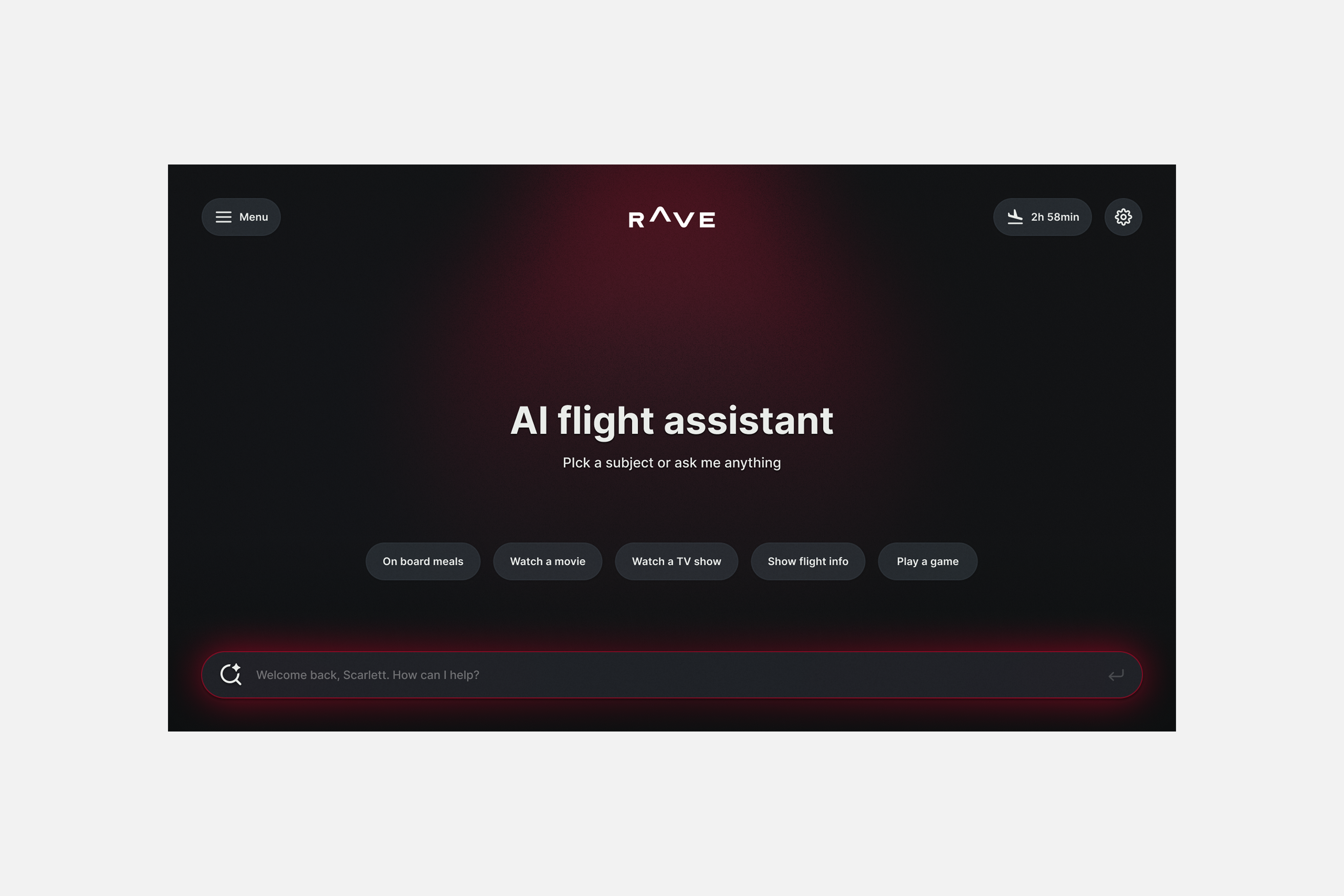
Delivered on schedule, ready for the platform's next chapter
Clear product priorities from RAVE, tight design-engineering collaboration on our side, and a platform ready for real integration kept the project moving. The demo arrived ready for RAVE's product roadmap, reflecting their direction at every level: the UI framework, the configurability approach, and the passenger experience decisions all trace back to RAVE's vision.
What the project also produced, beyond the demo itself, is a proven integration path. Third-party teams can build production-level GUIs on the RAVE Open Platform. This is the first working proof of that.
Our contributions
→ UX and UI design for the RAVE Next Generation GUI
→ Software development and platform integration within the RAVE open platform architecture
→ Feedback contributing to third-party developer accessibility of the platform
→ Project and stakeholder management across both organizations
Contact us
Let's take the next step together!
.jpg?width=600&name=Reaktor0989PRINTWEBTONED%20(3).jpg)
Dan DeCoste
Business Director, Reaktor Aero