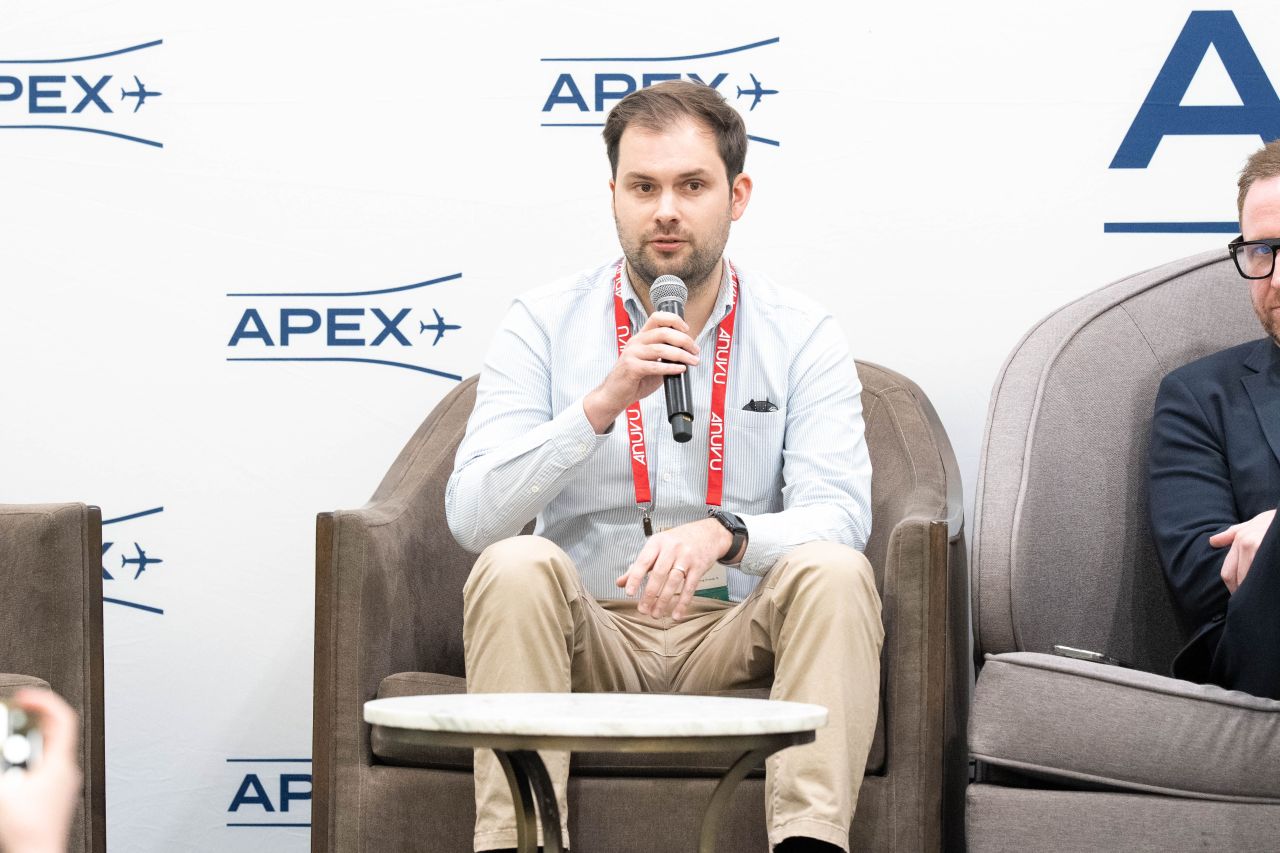
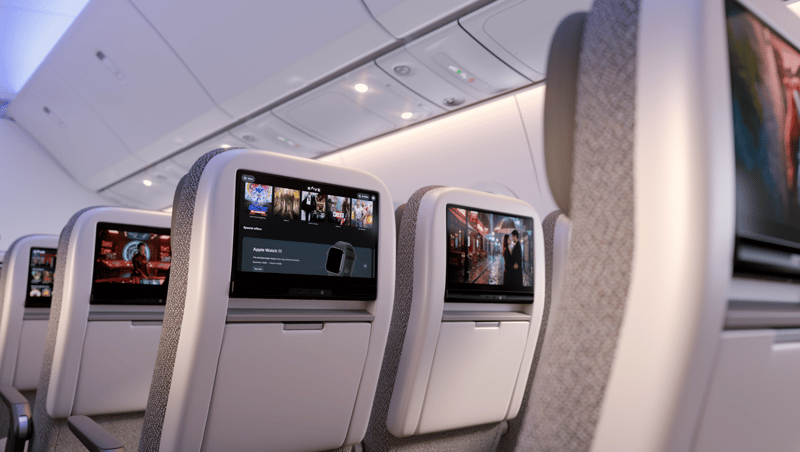
Reaktor’s Head of IFEC Engineering, Walter Berggren, captured this shift on stage, noting that for years the pace of progress in the cabin was dictated by hardware limitations. That’s no longer the case. With significant advances in both IFE and IFC, hardware has stopped being the primary bottleneck. This is putting the spotlight squarely on software, and the firms that enable it.
“Now we’re going to need to double down on software,” Berggren said. Instead of deploying systems that remain static for years, he argued, airlines should focus on digital platforms that evolve continuously, improve through data, and adapt to changing passenger expectations.
That message resonated strongly with the airline leaders, many of whom shared how they’re rethinking the cabin as a living digital ecosystem rather than a fixed product.
What airlines are building next
Aeroméxico
In his opening keynote, Andrés Castañeda Ochoa outlined Aeroméxico’s push toward a deeply data-driven onboard experience. The airline is investing in a unified, cloud-native foundation that brings together fragmented customer touchpoints, enabling personalization at scale across IFE, connectivity, and beyond.
Delta Air Lines
Delta shared how its Delta Sync platform has become a central nervous system for the onboard experience, connecting Wi-Fi, seatback IFE, loyalty, and personalization into a single ecosystem. The focus for Delta is applied innovation: simplifying access, rigorously testing in controlled environments, and ensuring reliability at scale. The result is higher engagement, stronger loyalty, and new revenue opportunities.
United Airlines
United focused on how its Kinective Media platform is turning the seatback screen into a powerful advertising and engagement channel. By pairing high-bandwidth connectivity with advanced, interactive seatback maps, United can deliver immersive, location-aware content that evolves throughout the flight. This creates new moments for relevant brand storytelling. Built on first-party data and a connective media approach, Kinective enables advertisers to reach passengers with personalized, contextually meaningful messages. A privacy-first foundation underpins the entire platform, ensuring personalization is delivered responsibly while maintaining passenger trust.
Air India
Air India closed the show with a story that stood apart for its sheer scale. Since returning to the Tata Group, the airline has embarked on a full transformation spanning fleet renewal, brand, culture, and digital systems. IFEC plays a key role, informed by extensive customer research and a focus on consistency across a diverse fleet. By standardizing interfaces, curating globally relevant content with a strong Indian identity, and using continuous feedback loops, Air India demonstrated how technology, governance, and culture must move together to modernize a legacy carrier.
From systems to software-driven experiences
APEX Tech 2026 made it clear that airlines are ready to move faster and that software, data, and experience design are now the primary levers for differentiation in the cabin. For Reaktor Aero, it was energizing to sponsor a conference where the conversation is shifting so decisively toward long-term digital thinking and where the cabin is finally being treated as the dynamic product it’s capable of becoming.